
BEACH CLEANUP SOLUTIONS TO IMPROVE:
EFFICIENCY
Most beach managers think efficiency problems come from not having enough staff or working fast enough. What we've actually found is that efficiency is almost always limited by the throughput capacity of the cleanup method itself—whether it can physically complete the required work within your available time window, even when operating at full capacity.
Below, we'll show you how different cleanup approaches compare in terms of speed, throughput capacity, and their ability to fit within operational time constraints—so you can identify which method will eliminate time pressure and allow consistent completion of cleanup within your windows.
If your beach cleanup program struggles with efficiency, you're likely
dealing with one or more of these limitations:
Cleanup regularly extends beyond your standard time window, forcing you to rush, skip steps, or leave areas incomplete
Peak-season or post-event debris volumes require overtime or extended hours, to complete cleanup
Available cleanup time keeps shrinking (tighter schedules, more beach closures, compressed windows) while expectations stay the same
You can't reliably predict cleanup times, making scheduling and resource planning difficult

The solution to improve efficiency is to employ a cleanup method with sufficient throughput capacity—measured in coverage area per hour—to complete required work within your operational windows, even during high-volume periods.
EFFICIENCY ACROSS CLEANUP METHODS
The following chart compares how the most common beach cleanup methods perform across cleanup speed, throughput capacity, time window fit, and scalability—so you can identify the best method to eliminate time constraints from your program.
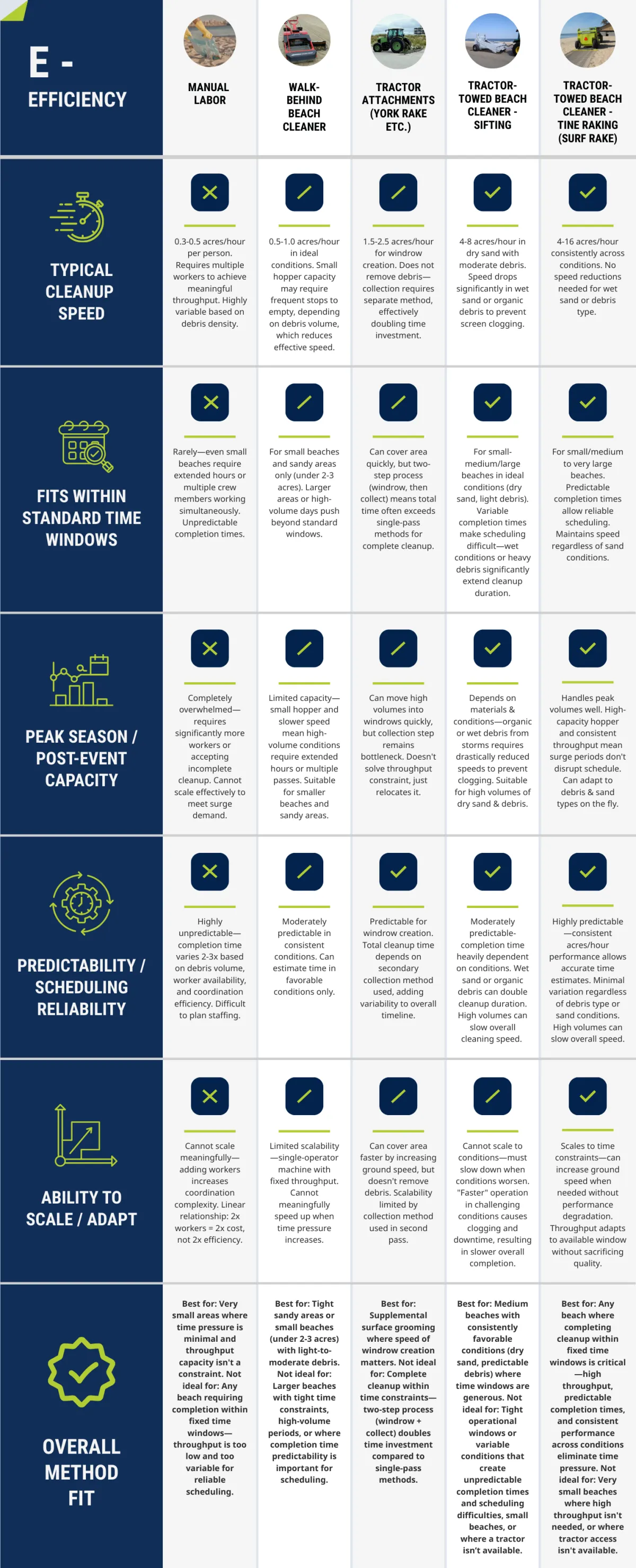
*Performance based on typical beach conditions. Actual results vary by specific debris composition, sand moisture, compaction, and beach terrain.
KEY TAKEAWAYS:
Tractor-Towed Tine-Raking Beach Cleaners
Deliver the Highest Throughput
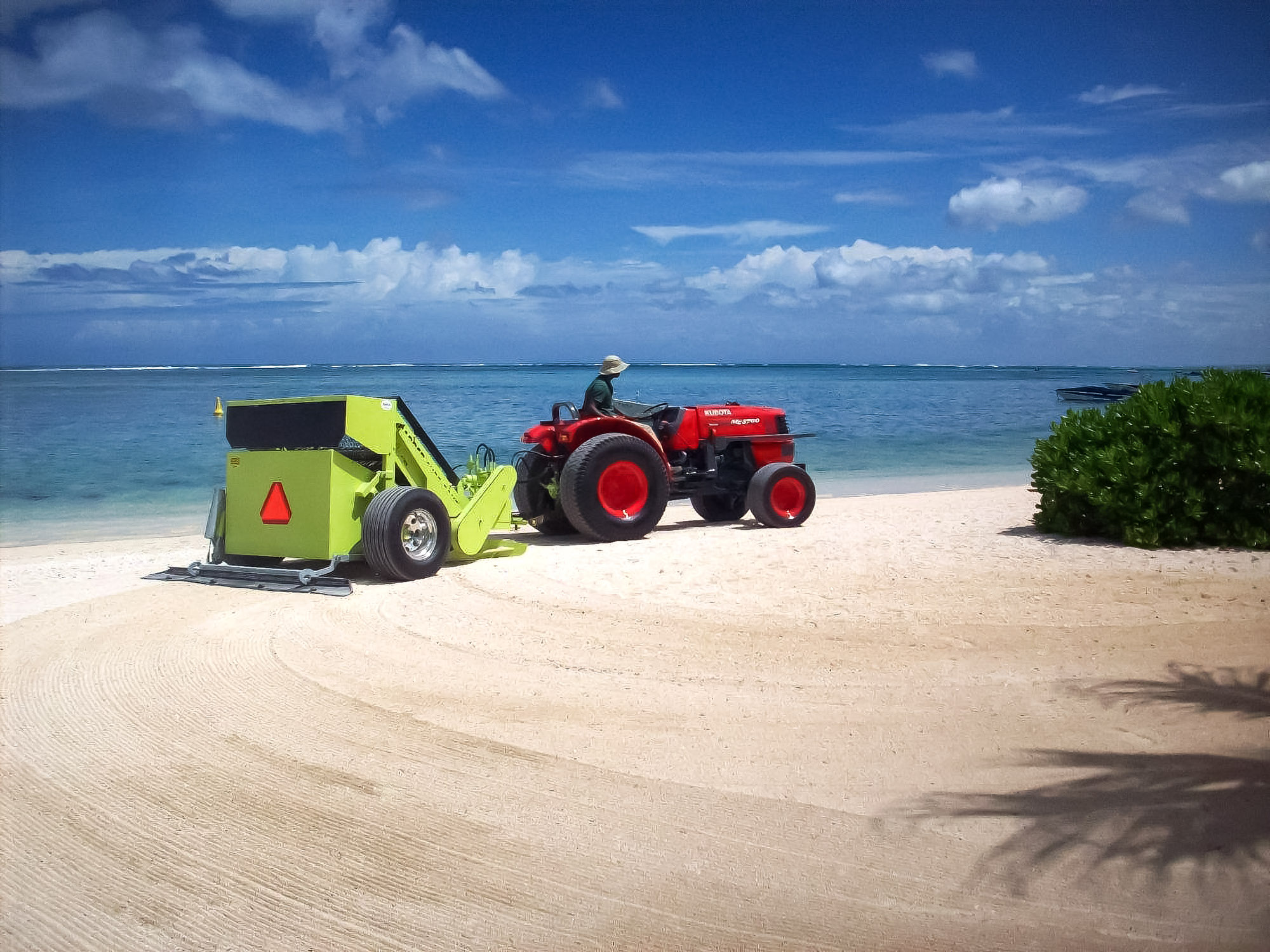
When efficiency is your constraint, you need a method with sufficient throughput capacity to complete cleanup within your available time window—not just on ideal days, but consistently across all conditions and volume levels..
While tractor-towed sifting machines offer higher speeds than manual or walk-behind methods, their throughput can be significantly variable—slowing in wet sand or with organic debris to prevent screen clogging, making completion times unpredictable.
Tine raking beach cleaners can ensure your beach gets cleaned within your operational window every time—not just when conditions cooperate or debris volume is light.
When Tractor Towed Machines
Might Not Be Necessary

Your beach is under 1 acre and current methods complete cleanup well within your available time window
Time pressure isn't a factor—you have generous operational windows and completion time isn't a constraint
Current throughput capacity meets your needs even during peak season or post-event cleanup
Budget constraints make equipment investment prohibitive right now
In these cases, manual cleanup, walk-behind machines, or tractor attachments might still work. But if you're regularly running out of time, adding overtime hours, or racing against compressed windows, tractor-towed tine raking typically provides the throughput capacity needed to eliminate time pressure from your program. A range of sizes makes tine-raking machines accessible to most beach operations.
SURF RAKE: TINE RAKING BEACH CLEANER FOR:
Maximum Throughput, Predictable Completion
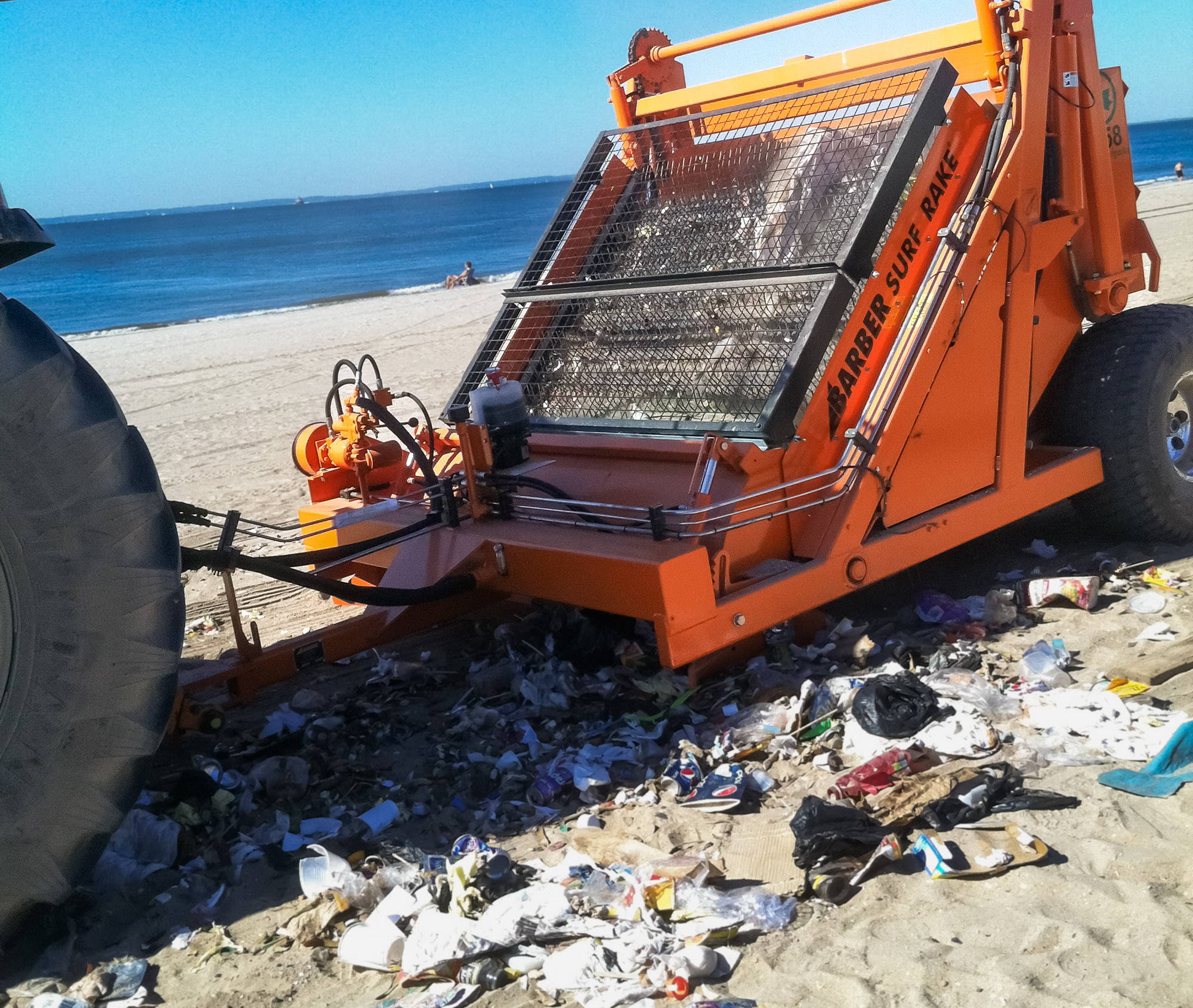
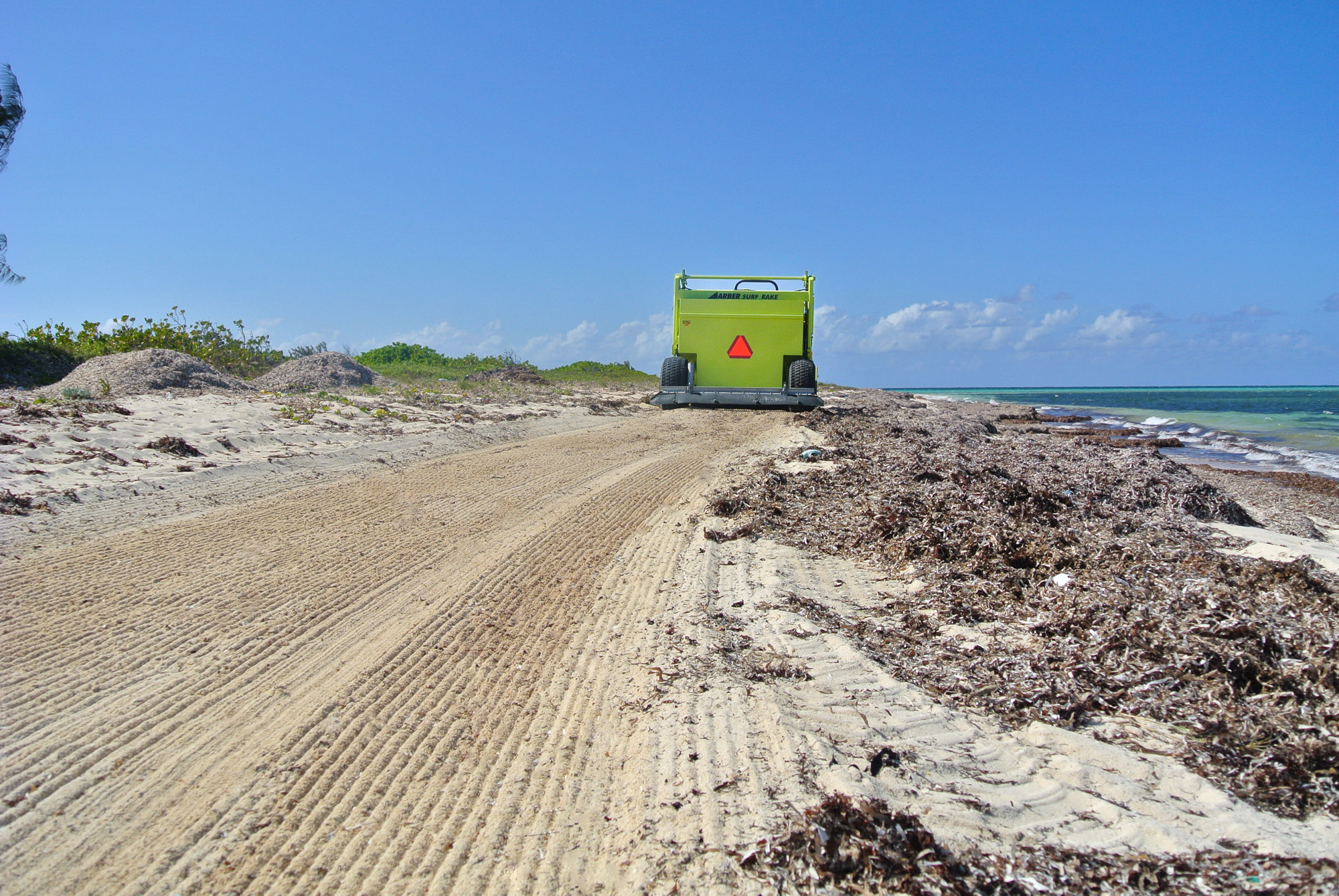
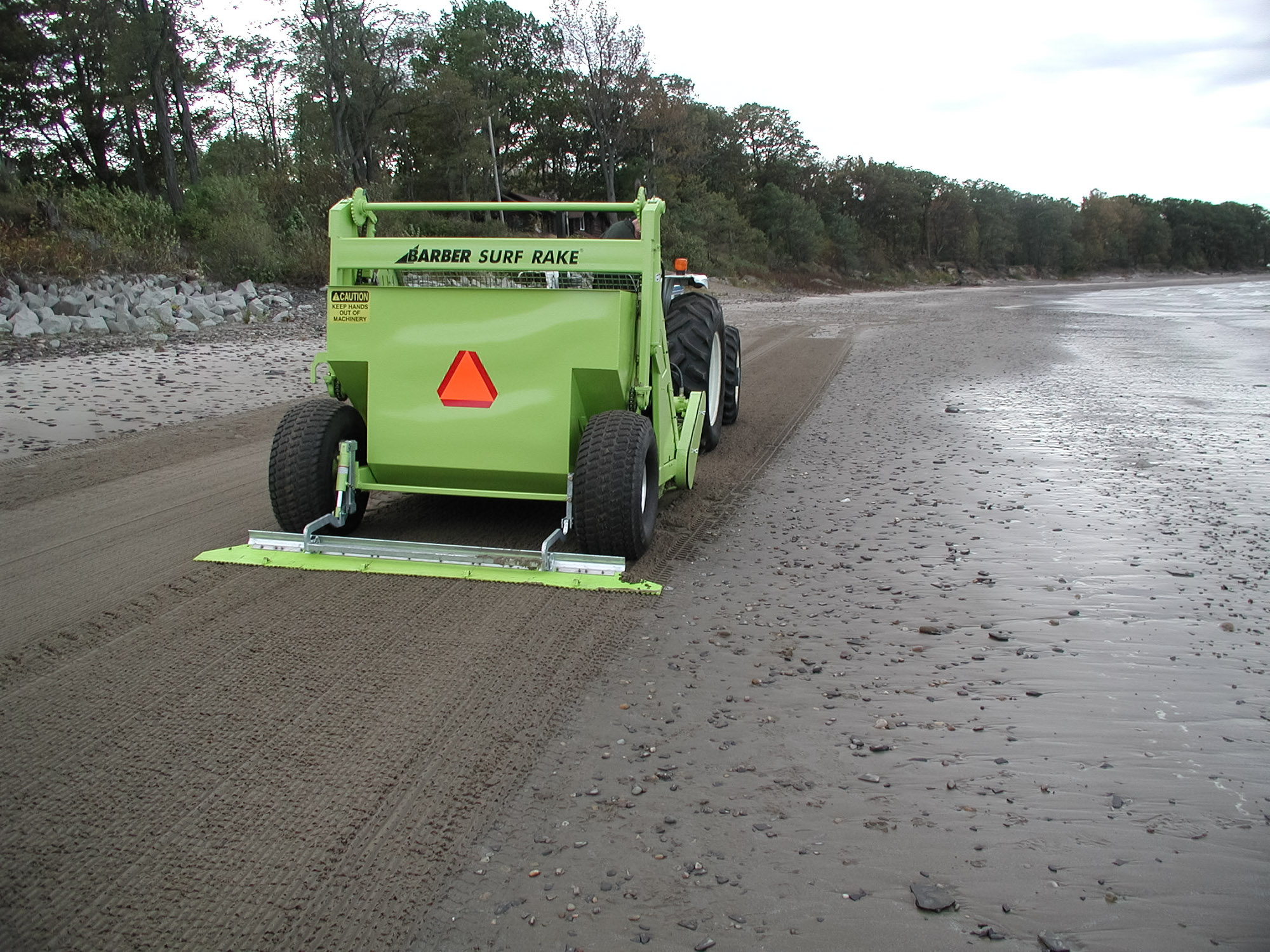
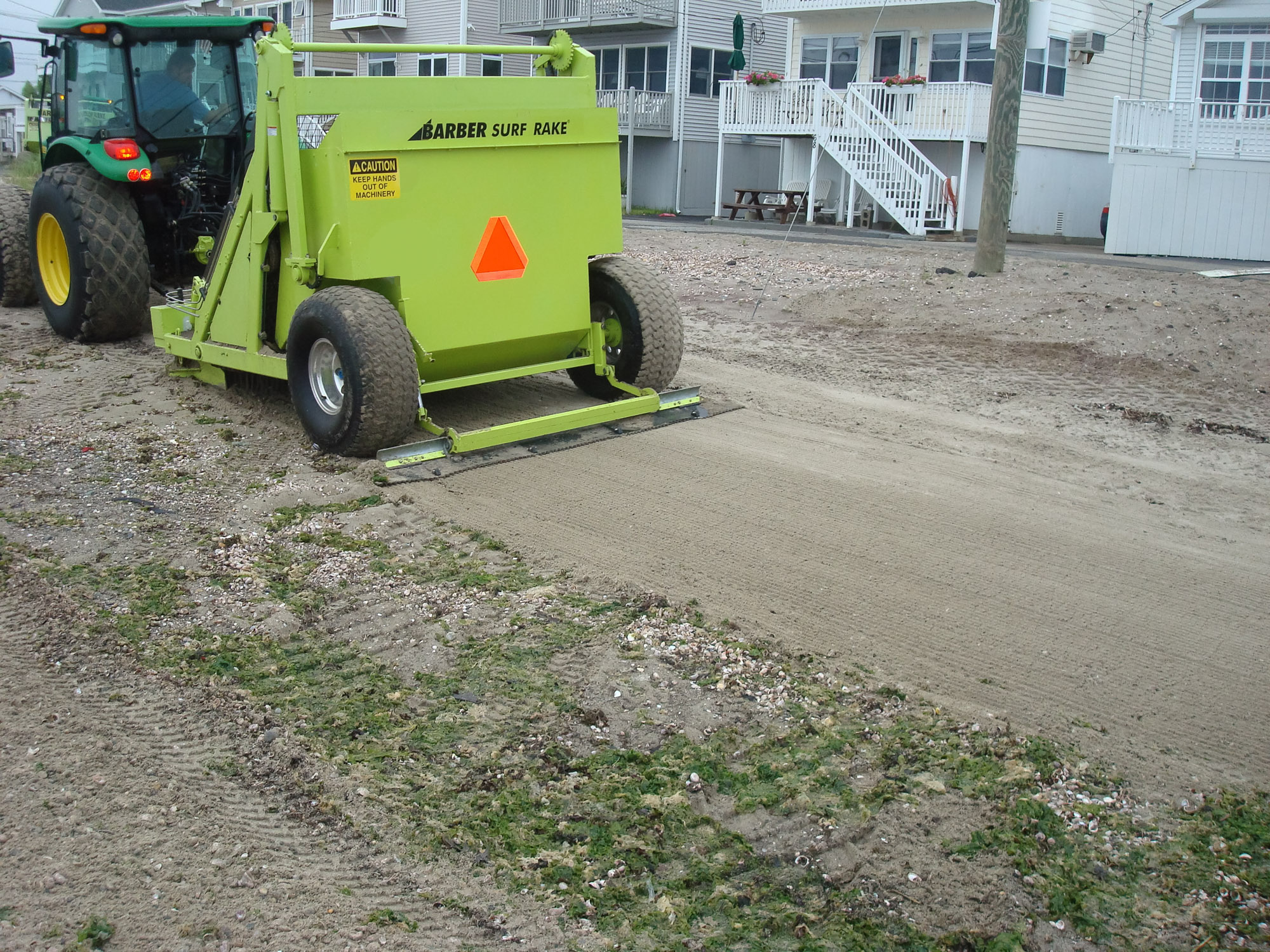
Since 1966, H. Barber & Sons has manufactured the Surf Rake—the most widely used tractor-towed beach cleaner in the world. It was designed specifically to deliver the highest consistent throughput capacity available, allowing beach cleanup to fit reliably within operational time constraints.
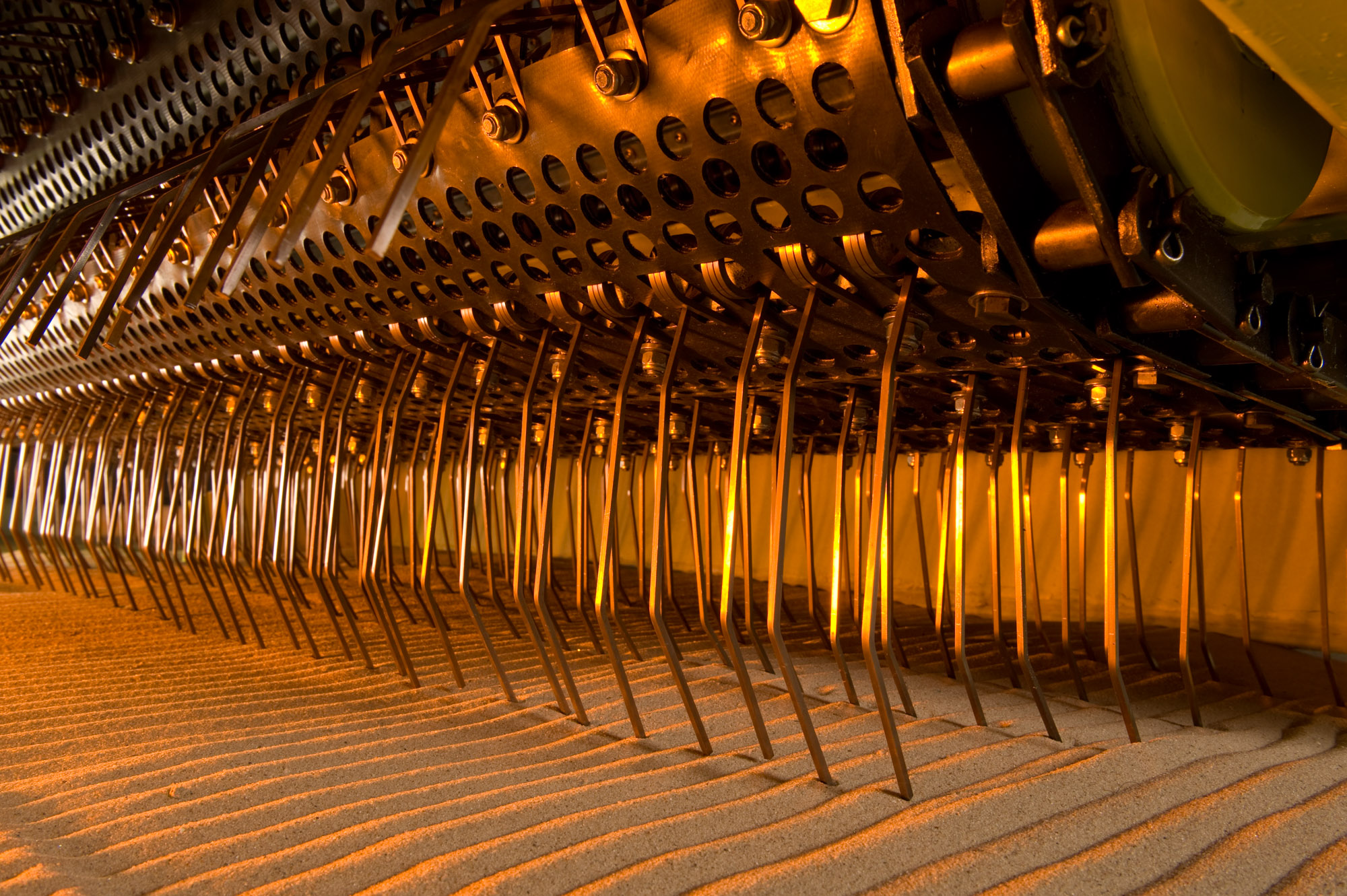
SURF RAKE BEACH CLEANER
Purpose-Built for Fast, Consistent Cleanup
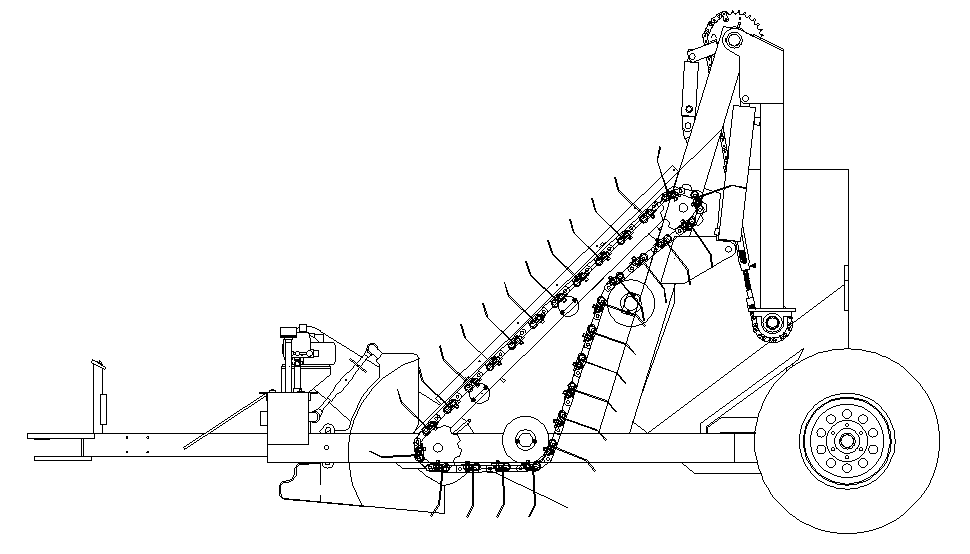
Tine-Raking Tech
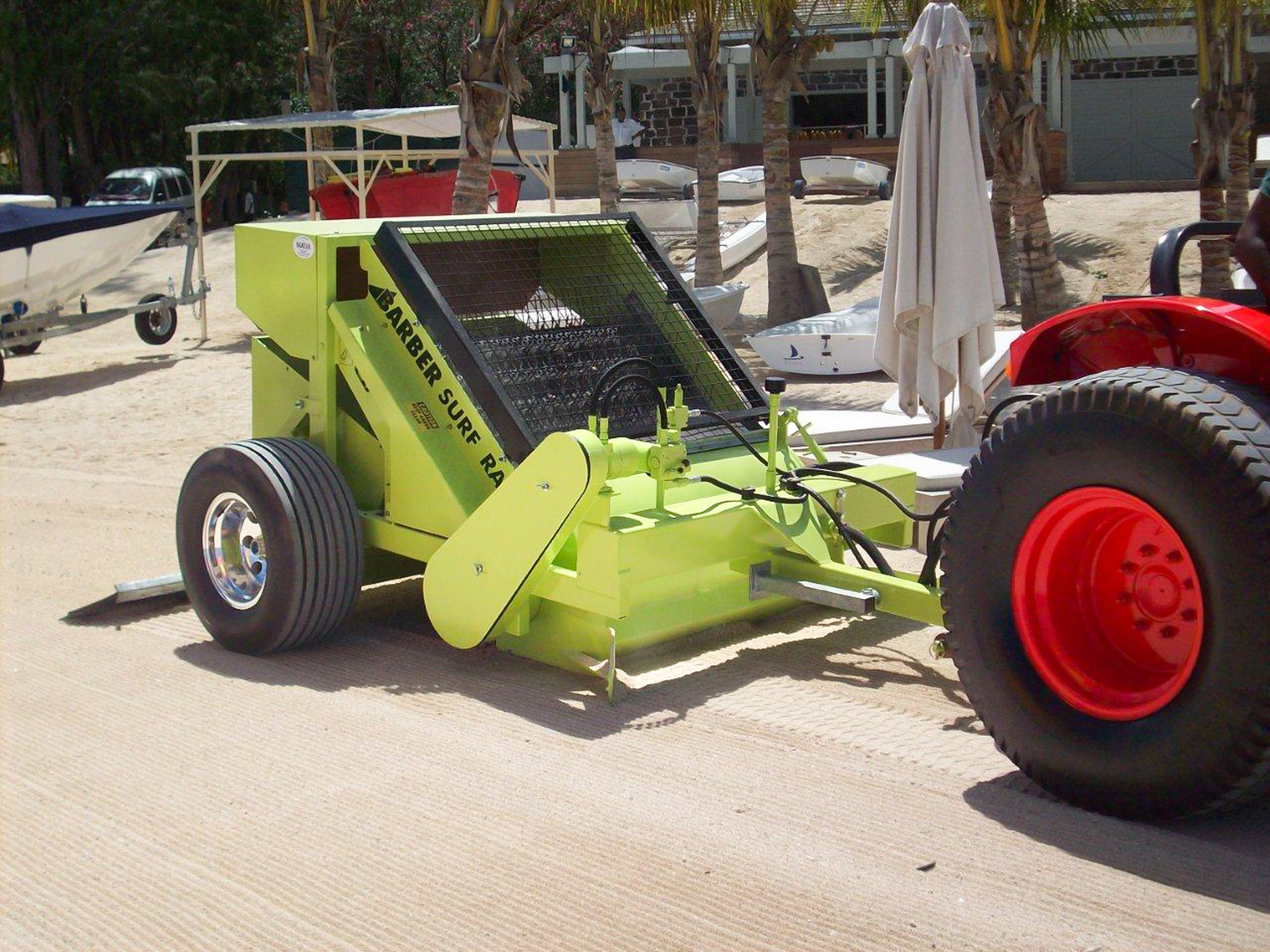
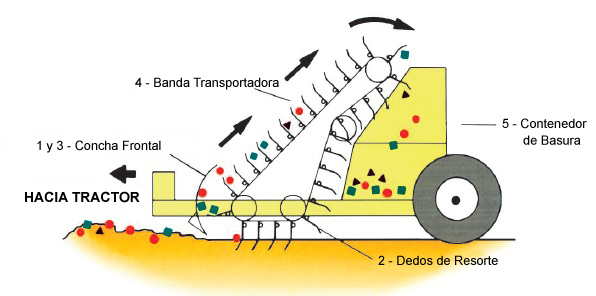
Instead of lifting the entire beach. like sifting units, the SURF RAKE only removes the debris by plucking it from the sand with its tines. This approach isn't affected by speed or sand conditions, so it can travel at faster ground speeds than sifting units.
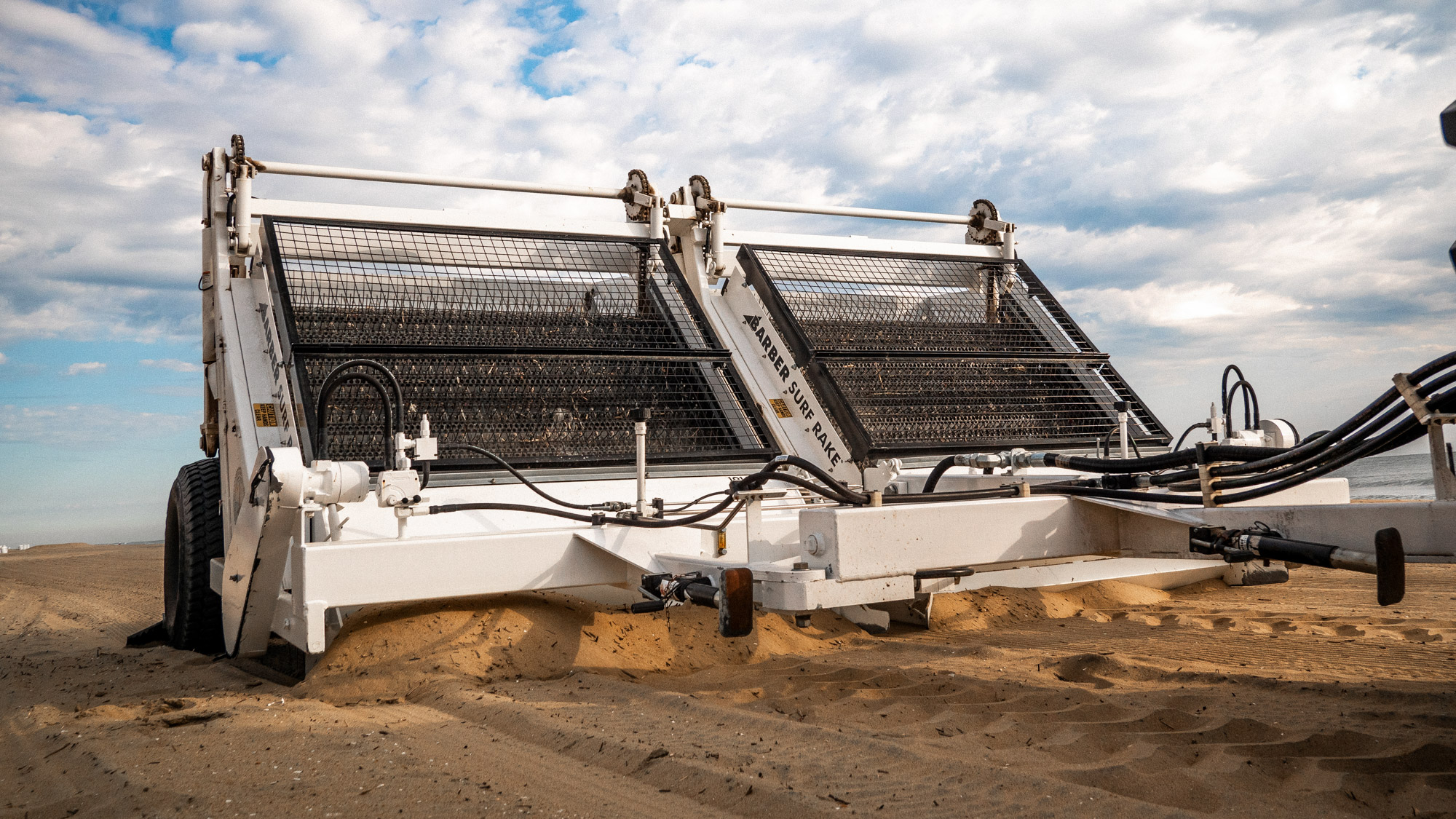
Large Cleaning Width
Ranging from 6-16 ft. wide (widest in industry), the SURF RAKE can cover more ground in a single pass than any other popular beach cleaner on the market, meaning fewer passes and faster completion.
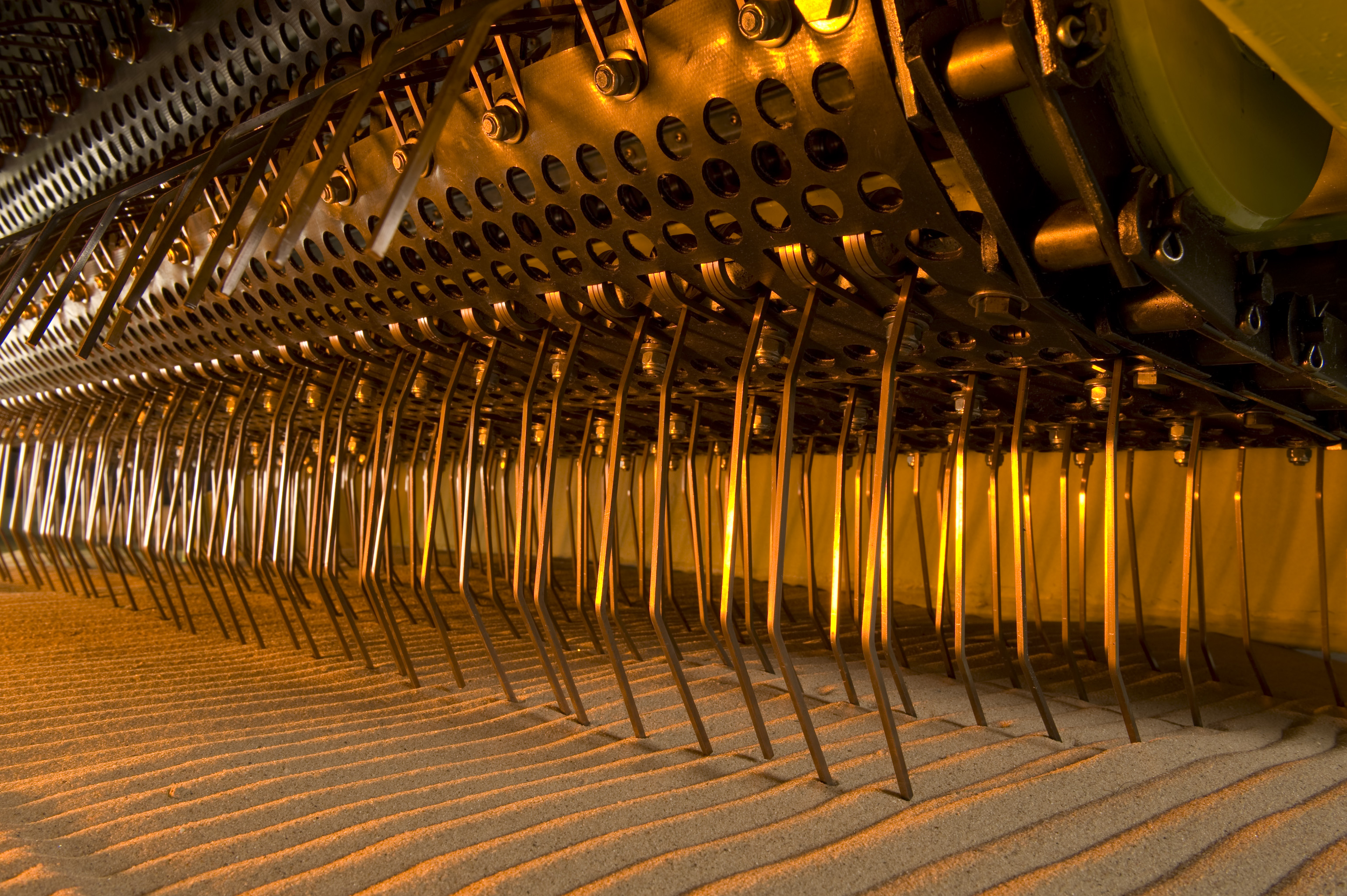
Patented S-Belt
A perforated belt allows excess sand to shake free from debris, as it travels up the conveyor, without waiting for it to pass through a screen. This allows the machine to keep cleaning without waiting or removing the beach.
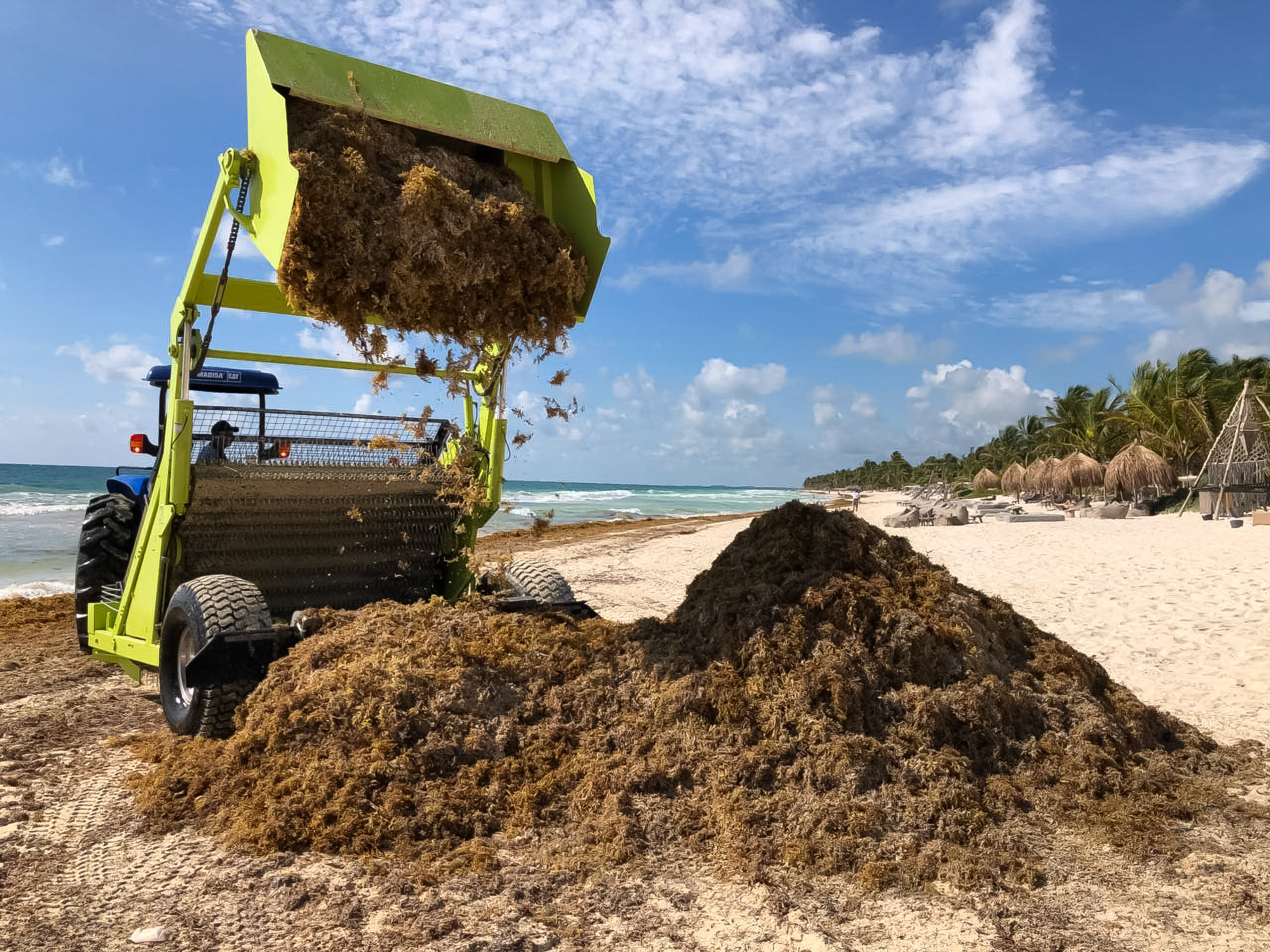
High-Capacity Hopper
Reduces dump frequency by holding more debris. Dump cycles traditionally are one of the biggest interruptions, which the SURF RAKE'S ample capacity overcomes.
Single-Pass Cleaning
Fast conveyor speeds and dense tine penetration, and an even , graded cleaning area allow for single pass cleanup--eliminating multiple rounds and spot cleaning.
Reliable, Proven Design
Efficiency isn't just throughput. Eliminate unexpected downtime with rock-solid, foolproof design and components that have been continually sourced, iterated, and proven over the past 60 years.
THE SURF RAKE:
Over 60 Years as the World's Most-Used & Trusted Beach Cleaner
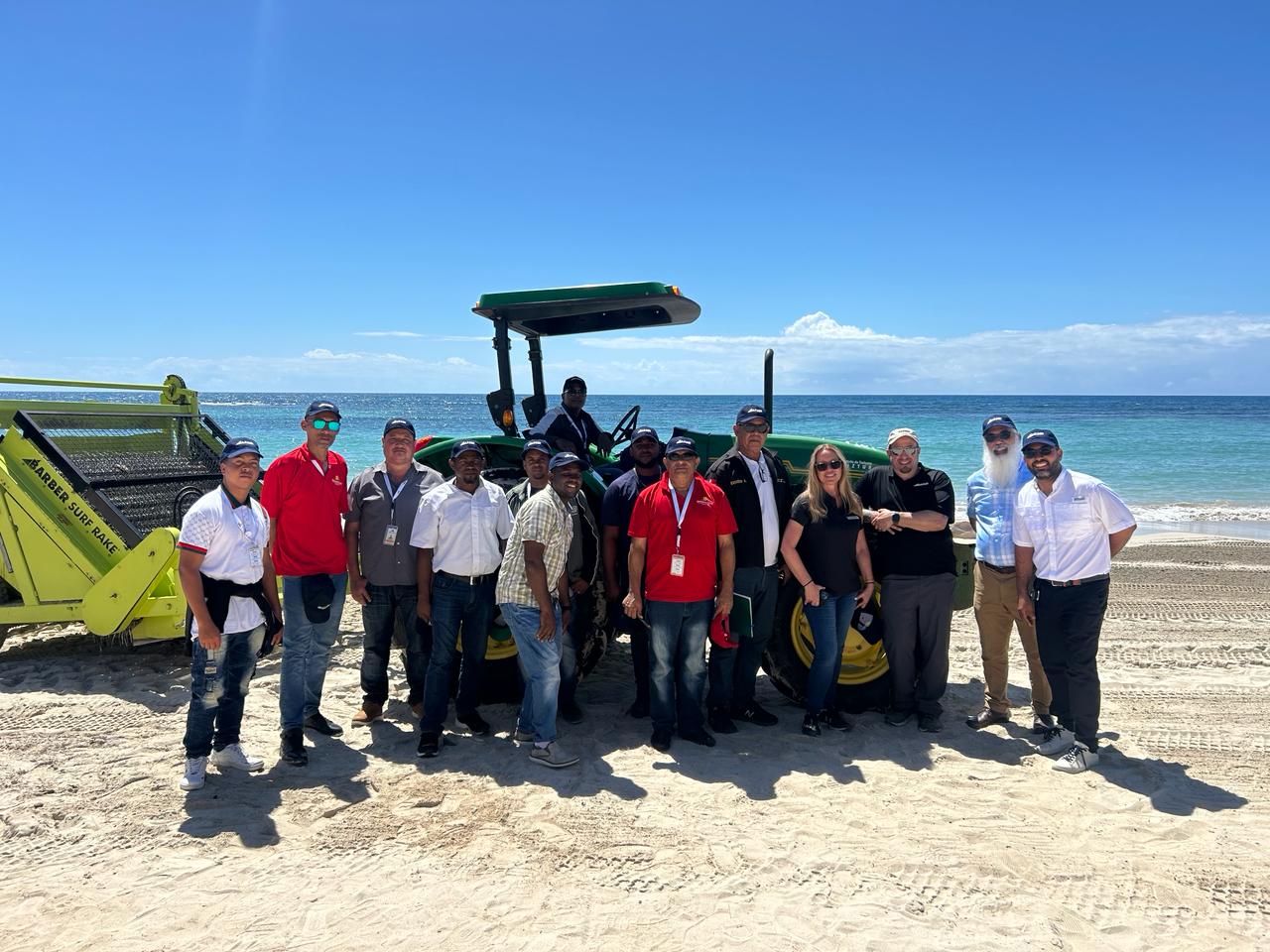
Used by thousands of beach managers across 90+ countries for the past 60+ years—including municipal beaches, resorts, private properties, and contractors—who need reliable beach cleaning. The SURF RAKE has been honed through iterative design to be the most reliable, efficient, and effective beach cleaning machine in the industry.
Request a Consult Call
Ready to see how the Surf Rake would handle your beach's debris and sand conditions?
We'll review your scorecard results and discuss any specific questions you have about how to improve your beach cleaning program. We can cover:
Whether mechanical beach cleaning is a good fit for your program
If so, which Surf Rake model fits your beach size and debris types
How it would handle your specific capability gaps
Operational impact compared to your current method
Not Ready to Talk?
Here Are Some Additional Resources
Review SURF RAKE Details
Technical specs, tine configurations, debris handling capacity, and model comparisons
Not Sure Which Model?
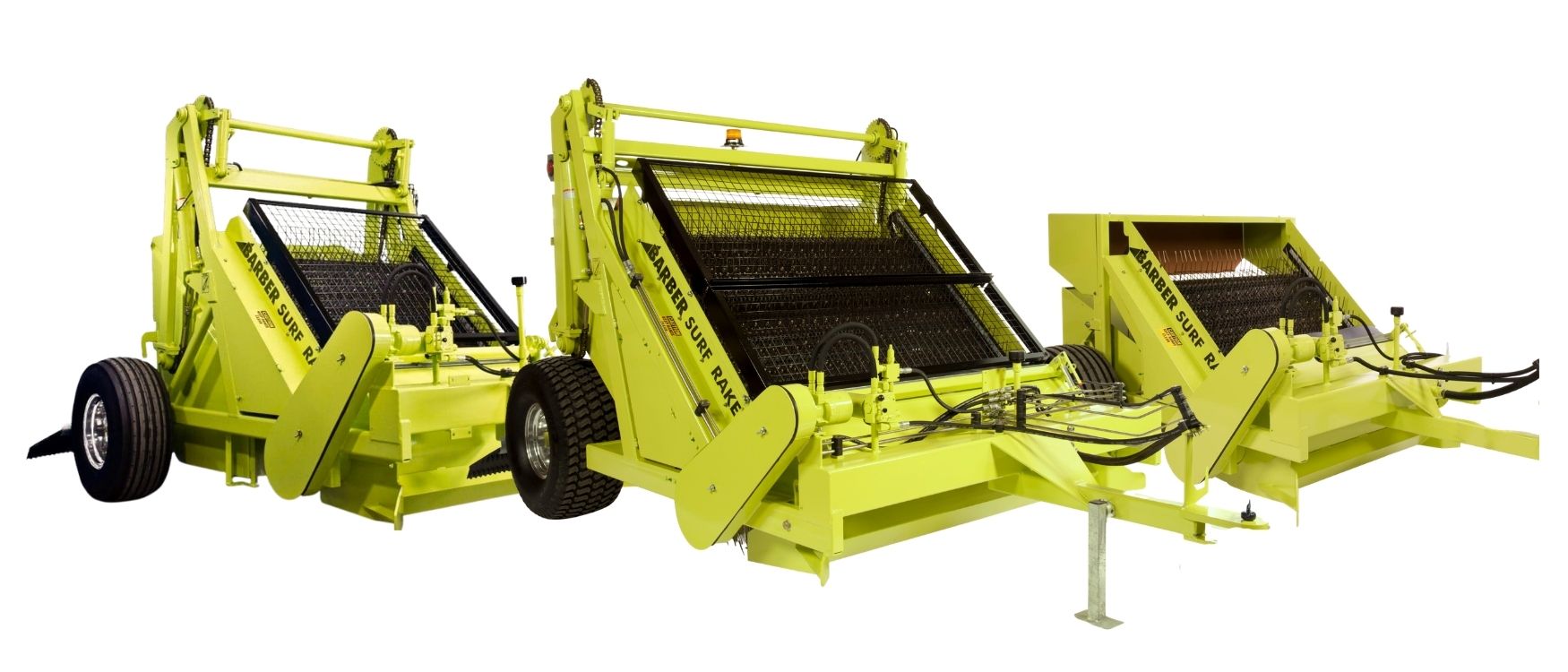
Use our Surf Rake Model Recommendation Tool to see which model could be the best fit for your beach.
See It in Action
See the Surf Rake handling seaweed, wet sand, subsurface debris, and post-storm cleanup
Copyright 2026